
Sensory & motor development
Gross Motor Development: Balance, Strength, and Mobility
Gross motor skills use the large muscles of the body — for sitting, walking, running, jumping, climbing and throwing. They depend on strength, balance, coordination and motor planning working together, and they matter well beyond the playground: stable posture supports attention, handwriting and confidence.
Last reviewed · Educational information only
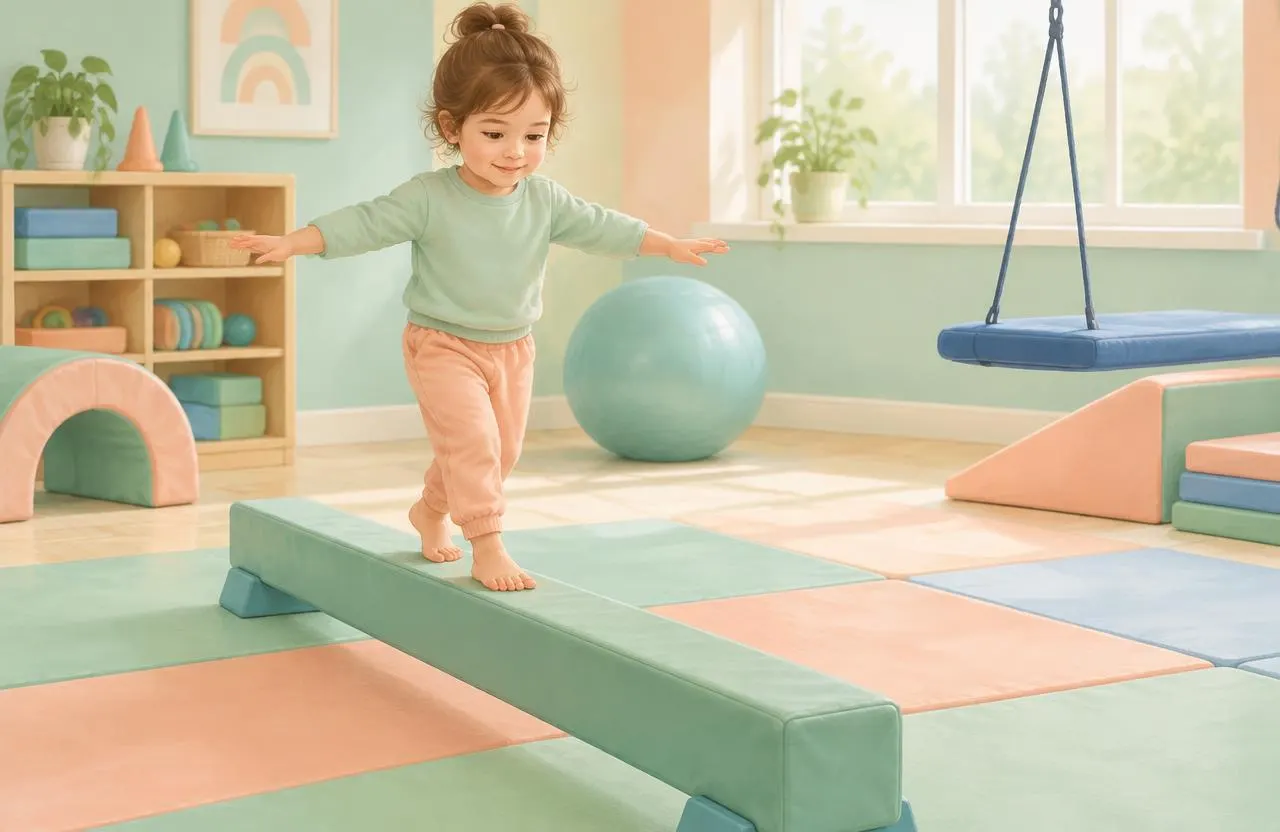
Key gross motor milestones
| Age (approx.) | Common skills |
|---|---|
| 4–6 months | Holds head steady, pushes up on arms during tummy time, begins rolling |
| 9 months | Sits without support, gets into sitting position |
| 12–15 months | Pulls to stand, cruises along furniture, takes first steps |
| 2 years | Runs, kicks a ball, climbs on and off furniture |
| 3 years | Climbs playground equipment, may alternate feet on stairs with support |
| 4 years | Hops on one foot briefly, catches a large ball most of the time |
| 5–6 years | Skips, balances on one foot for several seconds, rides a bike with training wheels or begins without |
See the full milestones guide for other developmental areas.
Building core stability
- Animal walks: bear crawls, crab walks, frog jumps
- Wheelbarrow walking with an adult holding the legs
- Lying on the tummy to draw or play games
- Sitting on a therapy ball while singing songs
- Playground climbing — ladders, rope nets and monkey bars
Balance and coordination activities
- Walking along a line of tape, then a low beam or curb
- Standing on one foot while counting or catching a beanbag
- Hopscotch and jumping into hoops
- Kicking and throwing at a target
- Scooter, balance bike and swimming
Motor planning and obstacle courses
Motor planning (praxis) is the ability to think up, plan and carry out an unfamiliar movement. Children with motor planning difficulty may seem clumsy, avoid new games, or take a long time to learn skills like pedaling.
Obstacle courses are an excellent home tool: crawl under a table, step over cushions, climb on a step, jump into a hoop. Let your child help design and sequence the course, then change one element at a time.
When to talk to a professional
- Losing skills a child previously had (always raise this promptly)
- Noticeable difference between left and right sides
- Persistent toe walking after about age 3
- Frequent falls or difficulty keeping up with peers
- Very floppy or very stiff muscles
A pediatric physical therapist can evaluate these concerns.
Child development tips, in your inbox
Practical, plain-language guidance on milestones, sensory needs and school support. No spam; unsubscribe anytime.