
School support
Classroom Coping Mechanisms and School Transition FAQ
The start of a school year brings new routines, rooms, people and noise all at once — a lot for any child, and especially for children with sensory or regulation differences. Preparing in advance, building simple coping tools and working with the school can make the transition much smoother.
Last reviewed · Educational information only
Before school starts
- Gradually shift bedtime and wake-up times one to two weeks ahead
- Visit the school, walk the route and find the classroom, bathroom and cafeteria
- Look at photos of the teacher and rooms if a visit isn't possible
- Practice opening lunch containers and managing the backpack
- Wear new clothes and shoes at home first, removing tags that bother your child
Coping skills to practice at home
Breathing tools
"Smell the flower, blow out the candle" or tracing a square while breathing.
Feelings check-ins
Using a simple scale (green, yellow, red) to name how they feel.
Body breaks
Wall push-ups, squeezing hands together, or a drink of water.
Asking for help
Practicing a script: "I need a break, please" or a break card.
Short, daily practice when calm makes these tools easier to use under stress.
Preventing sensory overload during the school day
- Ask about a quieter route or early entry to avoid crowded hallways
- Request a seat away from doors, windows or noisy equipment
- Pack familiar, preferred foods for lunch
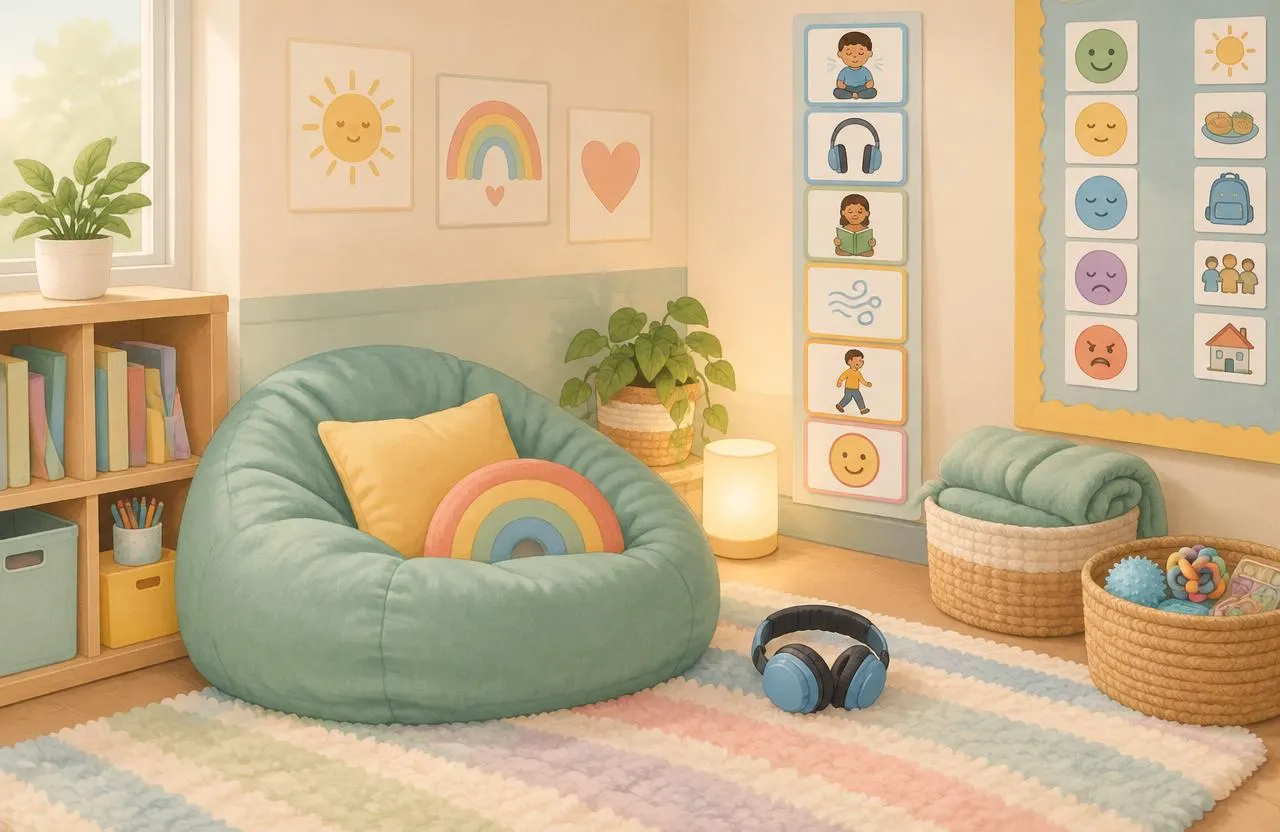
- Arrange access to a calm-down space or movement breaks
- Plan an after-school decompression routine — snack, quiet, then outdoor play
See classroom accommodations and the sensory diet guide for more ideas.
Frequently asked questions
My child holds it together at school and melts down at home. Why?
This is common. Many children use a lot of energy managing demands at school and release it in the safety of home. Share this with the teacher and build decompression time into afternoons.
How do I tell the teacher about my child's sensory needs?
A short one-page profile works well: strengths, triggers, early warning signs, and what helps. Ask for a brief meeting in the first weeks.
Should I ask for a 504 plan or IEP?
If sensory or regulation needs significantly affect learning or participation, you can request an evaluation in writing. Read our <a href='/iep-504-guide'>IEP vs 504 guide</a> to understand the differences.
How long should I expect the transition to take?
It varies. Many children settle over several weeks. If distress is intense or not easing, talk with the school team and your child's healthcare providers.
What should I do about school refusal?
Stay calm and consistent, try to identify specific triggers, and work with the school on a gradual plan. Persistent refusal or anxiety warrants a conversation with your pediatrician or a mental health professional.
Are fidget toys helpful in class?
For some children, a quiet fidget helps focus. Agree on rules with the teacher so it supports rather than distracts.
Child development tips, in your inbox
Practical, plain-language guidance on milestones, sensory needs and school support. No spam; unsubscribe anytime.