
School support
Effective Classroom Accommodations for Neurodivergent Learners
Small changes to the classroom environment and routine can make a big difference for students with sensory, motor or attention differences. The most effective accommodations are chosen for the individual student, agreed with the family and school team, and reviewed regularly.
Last reviewed · Educational information only
Seating and positioning
- Wobble cushions or stools for students who need movement
- Feet supported flat on the floor or a footrest
- Standing desks or the option to stand at the back
- Seating away from doors, windows, pencil sharpeners and HVAC vents
- Floor alternatives for carpet time, such as a cushion or chair at the edge
Environmental modifications
Sound
Noise-reducing headphones, felt pads on chair legs, a quieter workspace.
Light
Natural light where possible, reducing flickering or harsh lighting.
Visual clutter
Clear walls near the board, organized and labeled materials.
Calm space
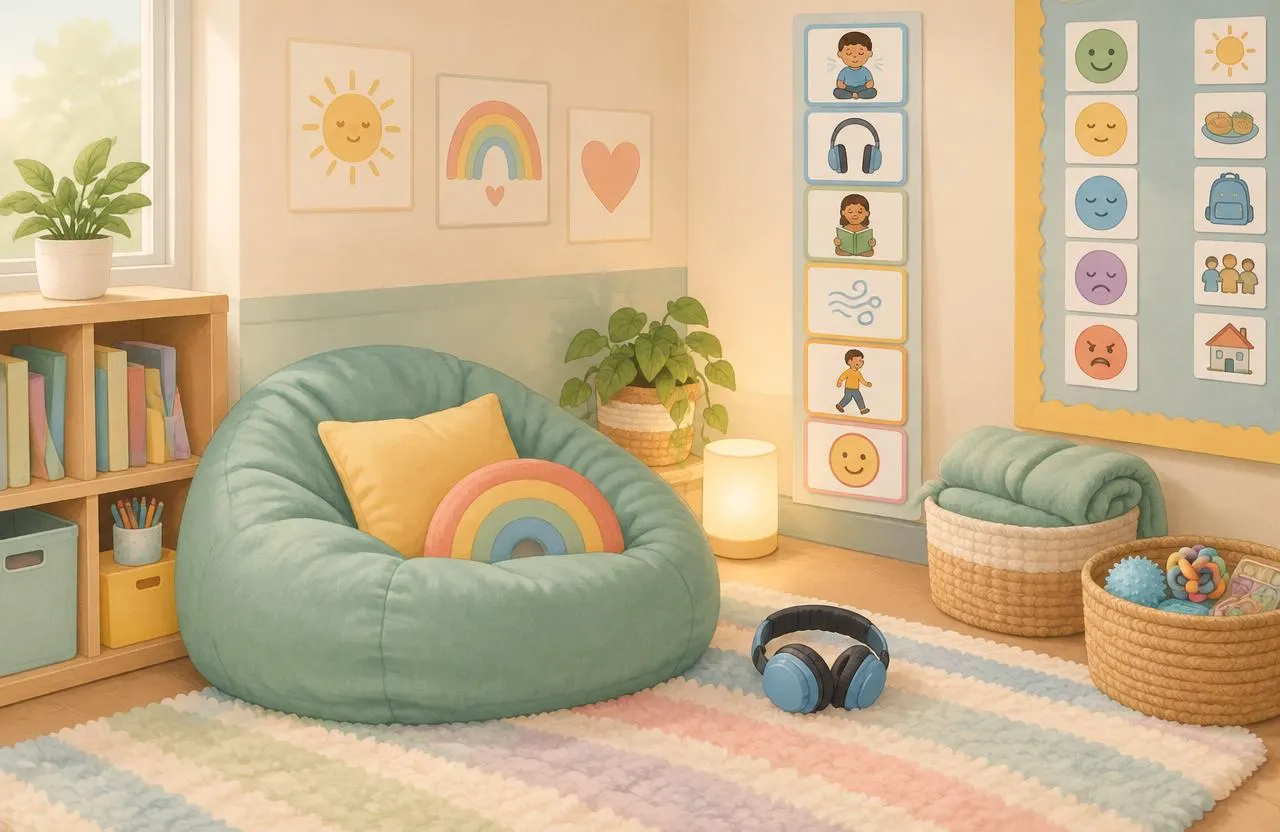
A designated, non-punitive calm corner the student can choose to use.
Visual supports and predictability
- Daily visual schedule, with changes shown in advance
- First-then boards for younger students
- Timers showing time remaining
- Step-by-step task cards for multi-step instructions
- Warnings before transitions, fire drills and assemblies where possible
Movement and motor breaks
- Scheduled short breaks every 20–30 minutes for students who need them
- Classroom jobs that involve heavy work — carrying books, wiping tables
- Whole-class movement breaks that benefit everyone
- Adapted writing tools: pencil grips, slant boards, wider-lined paper
- Keyboarding or speech-to-text for students with handwriting difficulty
A student's sensory diet can be woven into the school day.
Formalizing accommodations
Informal accommodations are a good start. When a student needs consistent support, accommodations can be written into an IEP or 504 plan so they follow the student across classes and years — see the IEP vs 504 guide.
Child development tips, in your inbox
Practical, plain-language guidance on milestones, sensory needs and school support. No spam; unsubscribe anytime.