
Teens & independence
Evaluating Driving Readiness and Motor Coordination in Autistic Teens
Many autistic teens learn to drive safely and gain valuable independence. Readiness depends less on a diagnosis than on specific skills — attention, executive function, sensory tolerance, visual-spatial awareness, motor coordination and emotional regulation. A structured, gradual approach and, where needed, a specialist driver evaluation can help families decide when and how to start.
Last reviewed · Educational information only
Why driving can be a dilemma
Driving combines many demands at once: watching the road, predicting what other drivers will do, managing speed and steering, handling noise and glare, and staying calm when plans change. Some autistic teens excel at rule-following and focus; others find multitasking, unexpected events or social road "rules" harder to manage.
Skills that influence readiness
Executive function
Planning a route, switching attention, remembering steps, and managing time.
Sensory processing
Coping with traffic noise, horns, sirens, bright lights and the feel of seat belts.
Visual-spatial awareness
Judging distance, speed and gaps; scanning mirrors and blind spots.
Reaction & motor coordination
Smoothly coordinating hands and feet and responding promptly.
Social prediction
Interpreting other drivers' and pedestrians' intentions and informal signals.
Emotional regulation
Staying calm in heavy traffic, when lost, or if stopped by police.
A step-by-step readiness approach
1. Build pre-driving skills
- Navigate as a passenger: call out signs, signals and hazards
- Ride a bike on quiet paths to practice road rules
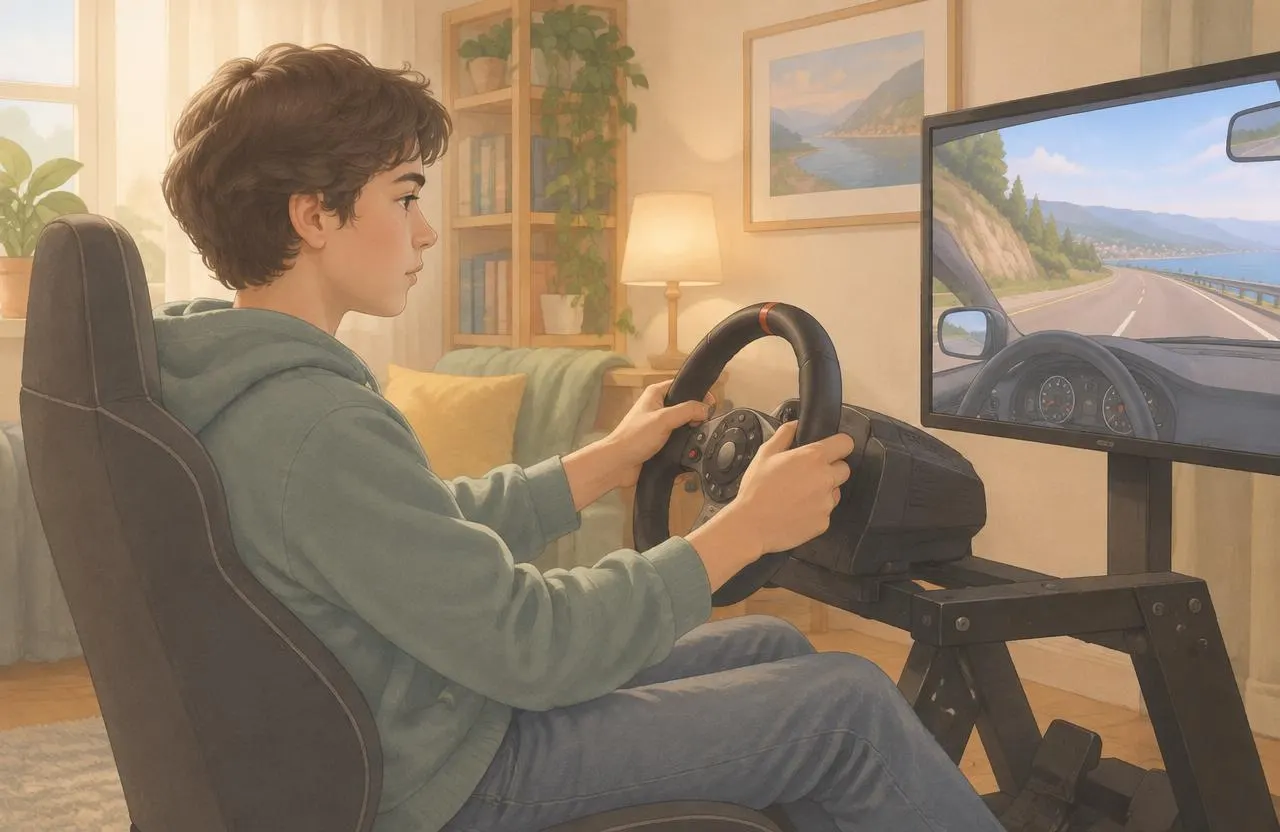
- Use driving simulators or video games to rehearse scanning and steering
2. Consider a specialist evaluation
- Certified driver rehabilitation specialists (CDRS), often occupational therapists, assess readiness and recommend training plans or adaptations
- Ask your teen's physician whether any medical factors or medications affect driving
3. Learn in graduated stages
- Start in empty parking lots, then quiet streets, then busier roads
- Practice one new skill at a time — left turns, merging, highways
- Use consistent, specific instructions given in advance
- Debrief calmly after each drive
4. Plan for the unexpected
- Rehearse what to do if lost, in a collision, or pulled over
- Some states offer communication cards or registries for autistic drivers — check with your state DMV
Talking with your teen
Involve your teen in the decision. Discuss their goals, what feels hard, and alternatives such as public transit, rideshare or cycling if they decide to wait. Readiness can change with time, and waiting is not failure.
If your teen has an IEP, transition planning (required by age 16 under IDEA) can include driving or other transportation goals — see the IEP vs 504 guide.
Child development tips, in your inbox
Practical, plain-language guidance on milestones, sensory needs and school support. No spam; unsubscribe anytime.